Exhibition:
Hyper-Kevinism
Photographer: Kevin Brown
Keywords:
Cubism, Hyper-cubism, Picasso, replication, subject-object continuum, dissolution, particle/field, narcissism
Welcome to the Museum:
Imagine Agent Smith and Neo are friends…and this is the kind of alternate universe to The Matrix that you are in when you visit the Museum of Digital Photography…a place where the brittleness of impossibility is phase-shifted into the skein of noodle-like possibilities any creative wok-chef or photographer is aware of: ginger, sesame oil, and a good camera…MODP seeks to be that night-market-noodle-stand for the midnight diner who is in constant motion ad gustare, toward flavor, unto the nexus of creativity, itself…ingredient-and-subject-matter-agnostic, this visitor…you…realize what Blake did…that you can behold infinity in a grain of sand…what Whitman did…that a blade of grass has more poetic magnitude than a tsunami…if this makes sense and makes you want to get out your surfboard, you are in the right place: the Museum of Digital Photography salutes you.
Overview of the Exhibition:
What is Hyper-Kevinism? Is it the same as Hyper-Johnism? Or Hyper-Ursulatude? Yes! Relax. Yes. But first, we need to prepare for the quiz. What quiz? Life! Life is a quiz! A litany of quizzes accumulating into a test! A test that life, itself, must pass in order for life to continue! Don’t worry! It’s not a science test! Those are hard! And it’s not a math test, either! It’s an Art test!!! That means all answers are correct! But some answers do have a little more style than others…and, speaking of style, we need to talk about cubism.
Yes, that cubism. I know. You are tired. Tired, tired, tired. It’s Picasso-this and Picasso-that, Picasso, Picasso y puis Picasso. Picasso, ad infinitum? Picasso, ad nauseum. Could we please have a museum that isn’t just another sycophantic tribute to you know who? You don’t know who? Picasso! Okay, well…was he really that good? Was Hemingway or Melville the better writer? These are the types of questions on the quiz.
To make this a bit more bearable, we will be using a FAKE history of Picasso but a REAL description of Cubism: Picasso was a Belgian beer-maker’s assistant in Antwerp who disdained the scent of vanilla so terribly that he stuffed wads of toilet paper in his nostrils everywhere he went, everyday, just to prevent the off-chance encounter with the fragrance he could not stand. One late evening in his beer cellar where he experimented with wild yeast, an accident occurred. A fermentation went wrong. A huge glass vessel exploded…fragments of the explosion lodged themselves in walls, tables, curtains, Picasso’s torso, his neck, and his right eye. When he had healed, all he had to say was that it could have been worse. It could have been the brew flavored with Vanilla.
The accident changed the way Picasso saw the world. Literally. When he closed his left, undamaged eye, he saw women with their faces distorted. He saw a kind of beauty in this new ugliness. He quit beer, moved to Paris, confirmed his artistic instincts when confronted with African sculpture, and the rest is, as they say, history. Now none of that is true, except the part about the statues. But what is true is that Cubism is a style that disrupts the normal topography of the visual…interrupts it, geometrically. Systematically anti-symmetry, it is an aesthetic program akin to the Dao de Ching…it views the sinusoidality of beauty and ugliness from the axis of the artist…
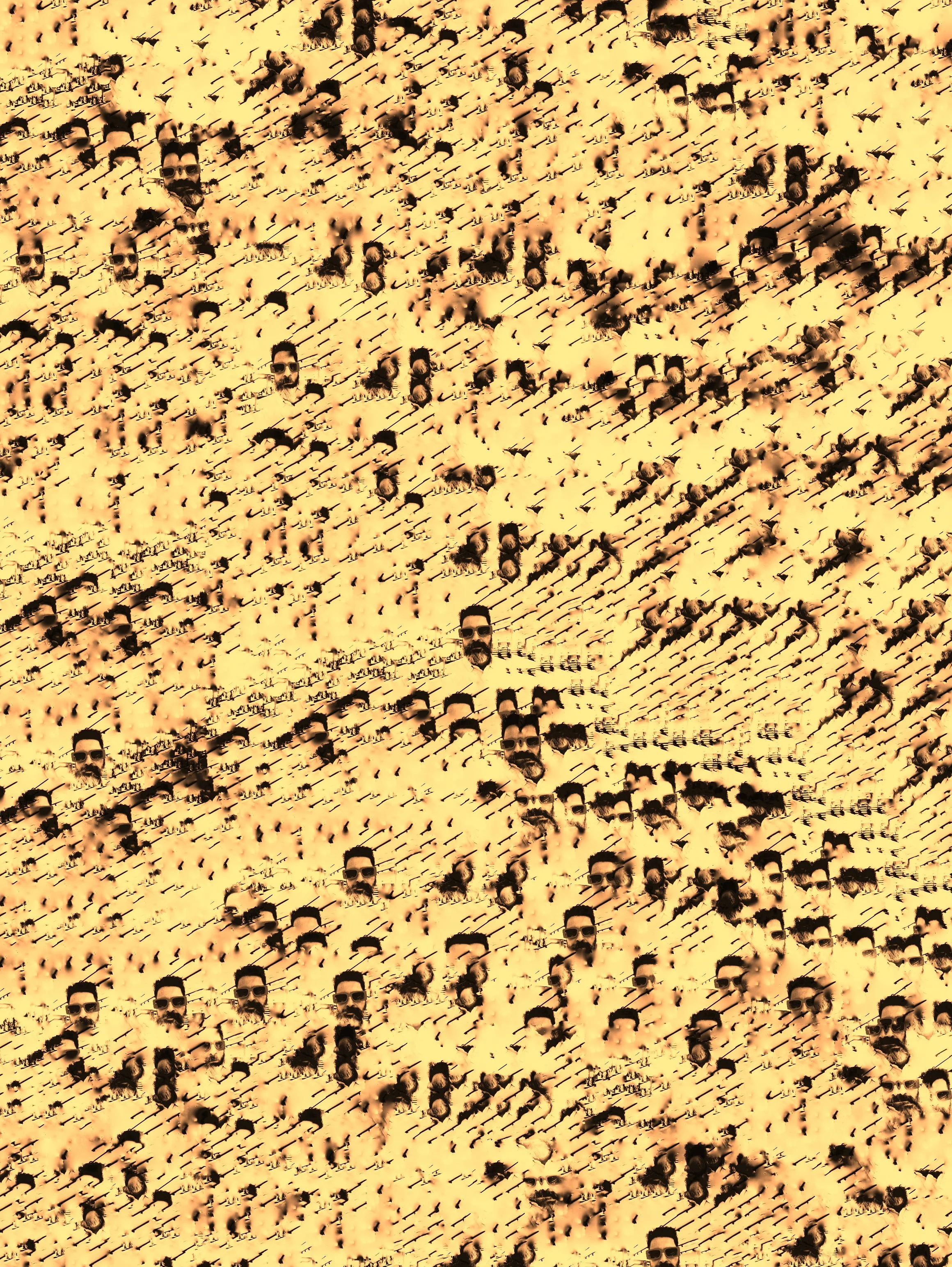
This particular exhibition is calibrated to unum, e-pluribus…from one, many…replication…refraction…not only is Picasso referenced, but so too is the ethos of Pollock …the smallification of the self in a search for aggrandizement…for this artist doesn’t take Narcissism too seriously. On the contrary, the portrait of the artist is meant as just the beginning…the beginning to decompose selfishness, visually, as a kind of proxy for a mandala or meditation that gives the self its equilibrium with the visually averaged meadow abloom with wildflowers.
You see, the artist was searching. Aren’t they always? He was searching for a subject. He is not shy. But he is reluctant to photograph others...making exceptions if a person is far enough away or not facing the lens so that some anonymity may remain for the person. He doesn’t like the objectification of people. If people were objects, then they would be made out of plastic! Obviously! And yet, he was curious. How do you photograph a person? How do you know a person, visually?
He could experiment on himself. And whilst he succeeded on many levels in his work in the portfolio Sui-Imaginem, where he got the hang of being and non-being, it is in Hyper-Kevinism that he found the mechanism for self-expression that transcends mono-figural portraiture. He found infinity. Or, at least, he found multiplicity. And the more “me” he got, the more he wanted! Agent Smith is a kindred psyche in this quest for self-explosivity…but in a good way.
The artist has no agenda to control an alternate illusion-based world! Don’t worry! Instead, he wants incredible influence and community in a place called the internet. Woops. Wait a minute. Hmmmm…Sometimes we have to lean into a hyper-self in order to make it through the torus of mirrors that surrounds us…to emerge, invisible, pure spirit…curator…desirer of giving, not taking.
Cubism, more directly put, is the 2-dimensional representation of the 3-dimensional via planar and defamiliarized renderings of the ordinary. Inspired and indebted to the geometric works of African sculpture that was saturating the art world at the time, Picasso sought to conflate African sculpture with Avignon mademoiselles. Hyper-Kevinism is much the same. And different. It seeks to provide a bounded visualized field—a corral, if you will—for the infinite flock of the self. Escape is possible, where it wasn’t in Picasso. In Kevin’s Hyper-world, the vertical becomes the horizontal. The tall blade of grass becomes the field. The field, as you are well aware, underwrites the fence of the corral. Through quaquaversal modesty, we achieve spiritual grandeur. We fly by being grounded.
If this technique piques your keen and obviously tasteful eye for great art, then check out more applications of the visual approach in the artist’s permanent portfolio, Hyper-Cubism.
Ways to Engage:
Take selfies. Just take them, already. Take more of them. You won’t regret it. But do something different.
Discussion Questions:
Have you read Charlotte Perkins Gillman’s The Yellow Wallpaper? Why not? Consider reading the classic short story. Could you make the argument that the story is about an artist creating a self-portrait?
Make a self-portrait using non-art materials. Take a photo of it and describe it in a well-written paragraph. Present your findings to a small group.
Which photo in the series below do you like best? Why?
-
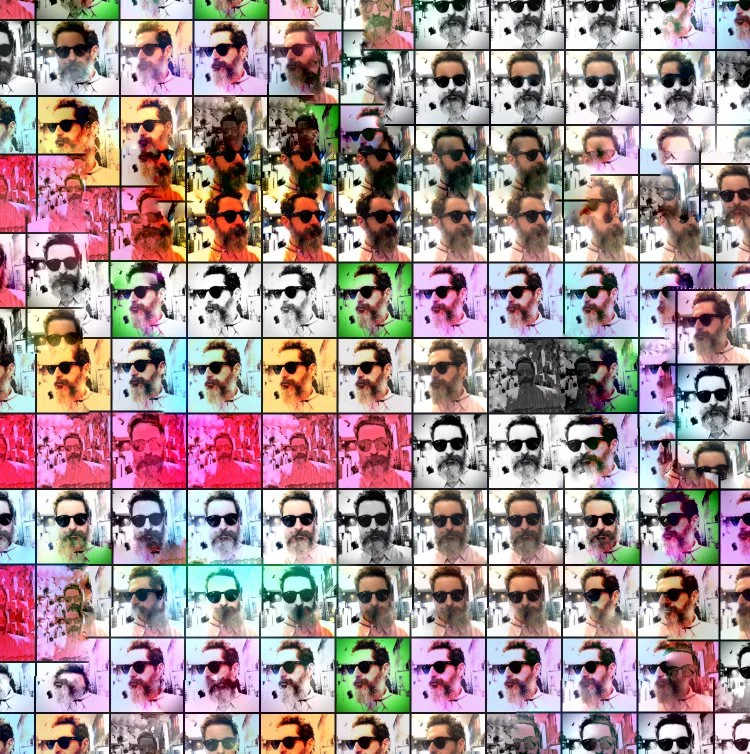
![100 squares of me]()
01
This grid of me is just the beginning…perhaps there are a hundred of me?
-
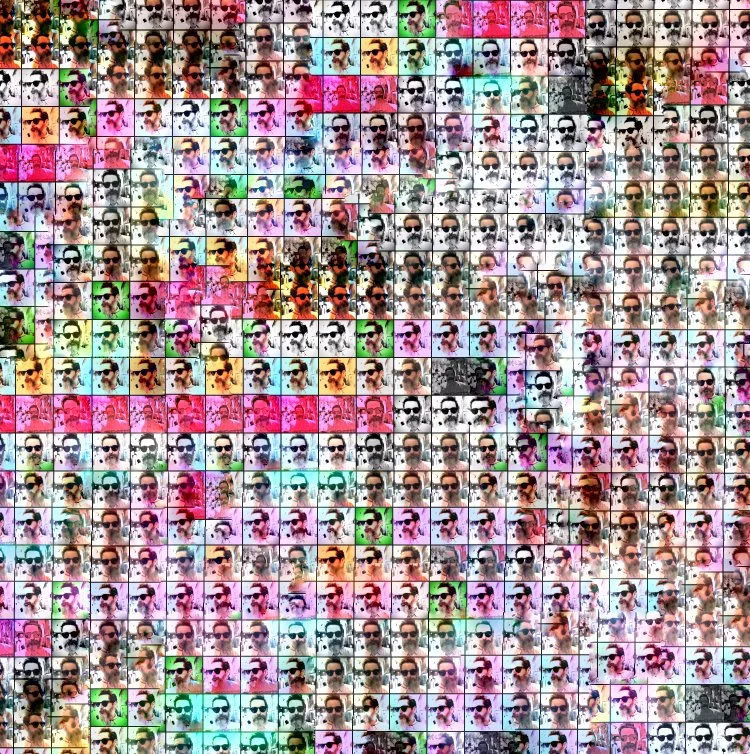
![More moi]()
02
And how many of me are there now? Roughly 400?
-
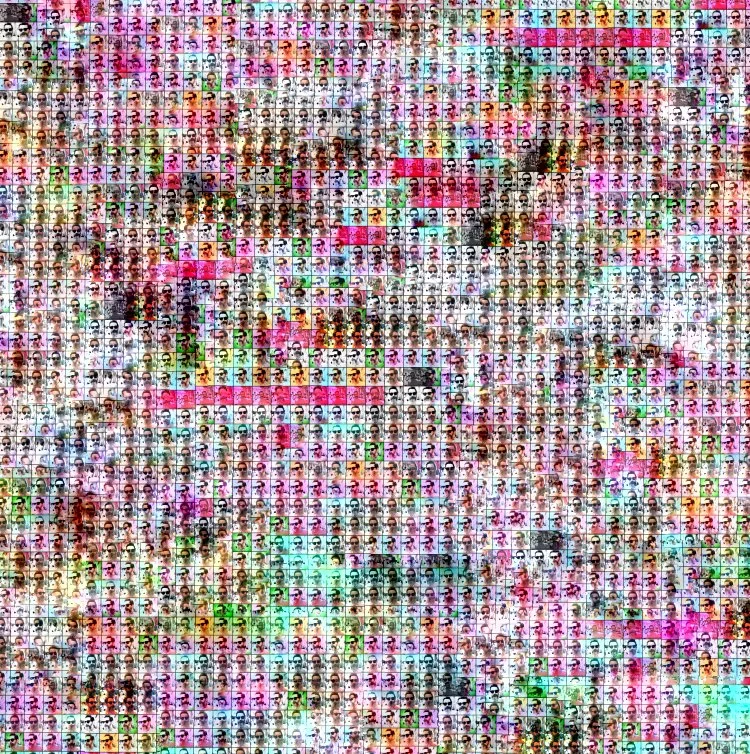
![Flying into Negative Space]()
03
50 × 50. I think I see 2,500 of me.
-
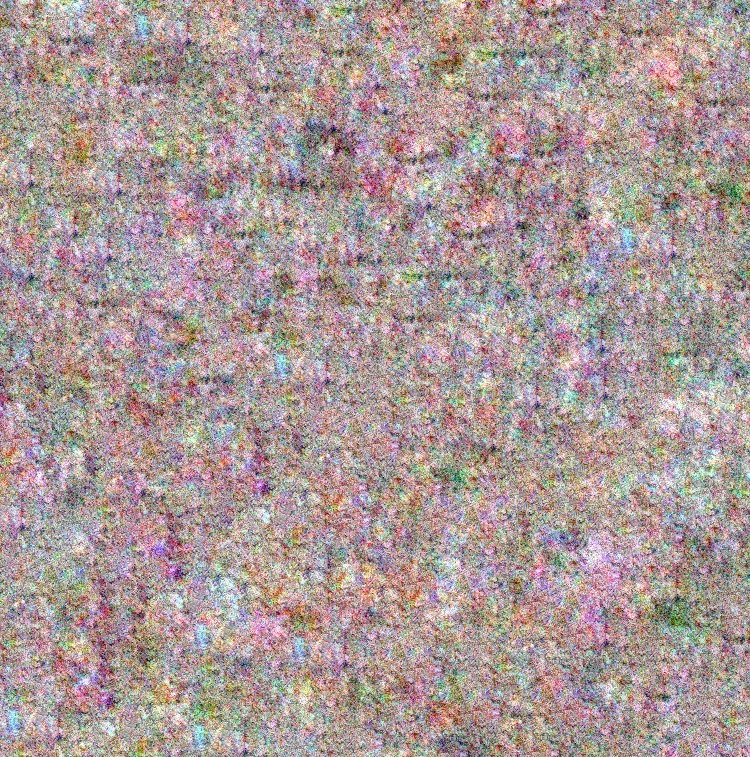
![Now we have lost count]()
Field of wildflowers in the South of France? Perchance. Or 12,500 Kevins?